

What is Metal Cleaning Agent
A metal cleaning agent is a substance specifically designed to remove dirt, rust, oil, grease, tarnish, and other contaminants from the surfaces of metal objects. The primary purpose of using a cleaning agent is to restore the appearance of the metal, prepare it for further processing such as painting or plating, or to prevent corrosion and maintain the integrity of the metal.
Why Choose Us
Team
Our company has a professional management team engaged in scientific research, safety production, quality control, and sales operations
Production Line
We have highly automated production lines and international standard research and development facilities
Security Management
We emphasize safety and environmental management
Our Product
Degreaser;Metal cleaning agent; Antirust agent;Phosphating agent;Silane agent;Cutting solution;Copper blackening agent;Iron rusting agent.
-
![Pickling And Passivation Paste For Stainless Steel]() Pickling And Passivation Paste For Stainless SteelLabel:custom Weight:custom Package:barrel Sample:free Shipping:Fedex/DHLread more
Pickling And Passivation Paste For Stainless SteelLabel:custom Weight:custom Package:barrel Sample:free Shipping:Fedex/DHLread more -
![How To Clean Rust Off Metal]() How To Clean Rust Off MetalProduct name:Metal cleaning agent . Usage:Remover oil and rust. Label:Custom. Certification:MSDS. MOQ:100ml. Sample:free sample can be sent to check qualityread more
How To Clean Rust Off MetalProduct name:Metal cleaning agent . Usage:Remover oil and rust. Label:Custom. Certification:MSDS. MOQ:100ml. Sample:free sample can be sent to check qualityread more -
![Best Metal Cleaning Solution]() Best Metal Cleaning SolutionProduct name:Metal cleaning agent . Usage:Remover oil and rust. Label:Custom. Certification:MSDS. MOQ:100ml. Sample:free sample can be sent to check qualityread more
Best Metal Cleaning SolutionProduct name:Metal cleaning agent . Usage:Remover oil and rust. Label:Custom. Certification:MSDS. MOQ:100ml. Sample:free sample can be sent to check qualityread more -
![Metal Mold Cleaning Agent]() Metal Mold Cleaning AgentProduct name:Metal cleaning agent . Usage:Remover oil and rust. Label:Custom. Certification:MSDS. MOQ:100ml. Sample:Free sample can be sent to check qualityread more
Metal Mold Cleaning AgentProduct name:Metal cleaning agent . Usage:Remover oil and rust. Label:Custom. Certification:MSDS. MOQ:100ml. Sample:Free sample can be sent to check qualityread more -
![Professional Aluminum Cleaning Solution]() Professional Aluminum Cleaning SolutionProduct name:Metal cleaning agent . Usage:Remover oil and rust. Label:Custom. Certification:MSDS. MOQ:100ml. Sample:free sample can be sent to check qualityread more
Professional Aluminum Cleaning SolutionProduct name:Metal cleaning agent . Usage:Remover oil and rust. Label:Custom. Certification:MSDS. MOQ:100ml. Sample:free sample can be sent to check qualityread more -
![Best Cleaning Solution for Aluminum Metal]() Best Cleaning Solution for Aluminum MetalProduct name:Metal cleaning agent . Usage:Remover oil and rust. Label:Custom. Certification:MSDS. MOQ:100ml. Sample:free sample can be sent to check qualityread more
Best Cleaning Solution for Aluminum MetalProduct name:Metal cleaning agent . Usage:Remover oil and rust. Label:Custom. Certification:MSDS. MOQ:100ml. Sample:free sample can be sent to check qualityread more -
![Available Cleaning Agents At Copper Cleaning]() Available Cleaning Agents At Copper CleaningProduct name:Metal cleaning agent . Usage:Remover oil and rust. Label:Custom. Certification:MSDS. MOQ:100ml. Sample:free sample can be sent to check qualityread more
Available Cleaning Agents At Copper CleaningProduct name:Metal cleaning agent . Usage:Remover oil and rust. Label:Custom. Certification:MSDS. MOQ:100ml. Sample:free sample can be sent to check qualityread more -
![Chemical Used in Copper Cleaning Agents]() Chemical Used in Copper Cleaning AgentsProduct name:Metal cleaning agent . Usage:Remover oil and rust. Label:Custom. Certification:MSDS. MOQ:100ml. Sample:free sample can be sent to check qualityread more
Chemical Used in Copper Cleaning AgentsProduct name:Metal cleaning agent . Usage:Remover oil and rust. Label:Custom. Certification:MSDS. MOQ:100ml. Sample:free sample can be sent to check qualityread more


What are the selection methods of metal cleaner
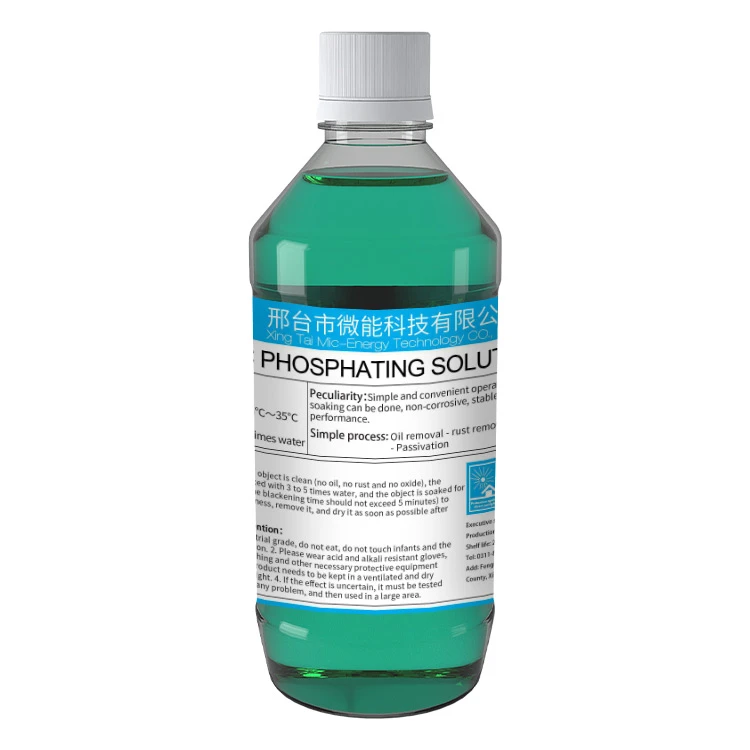
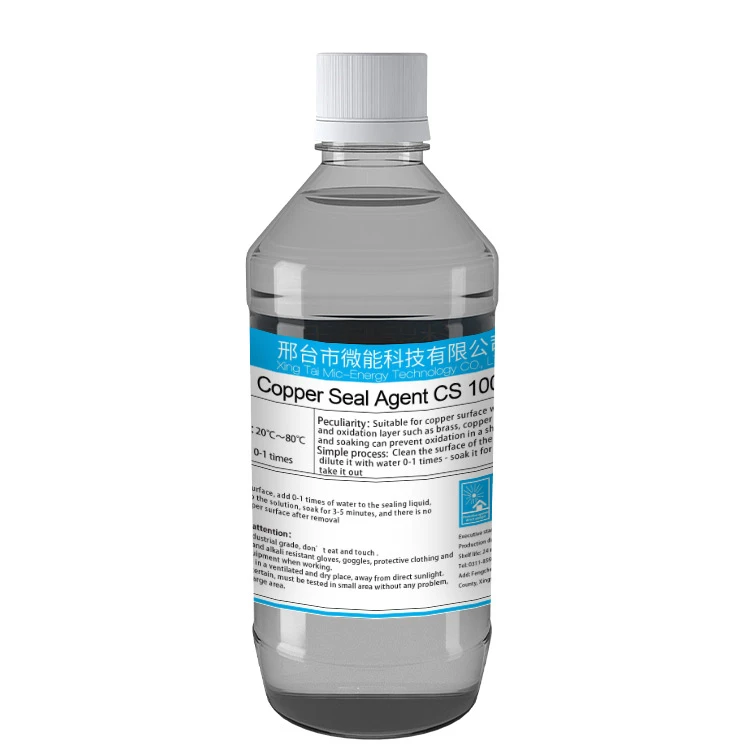
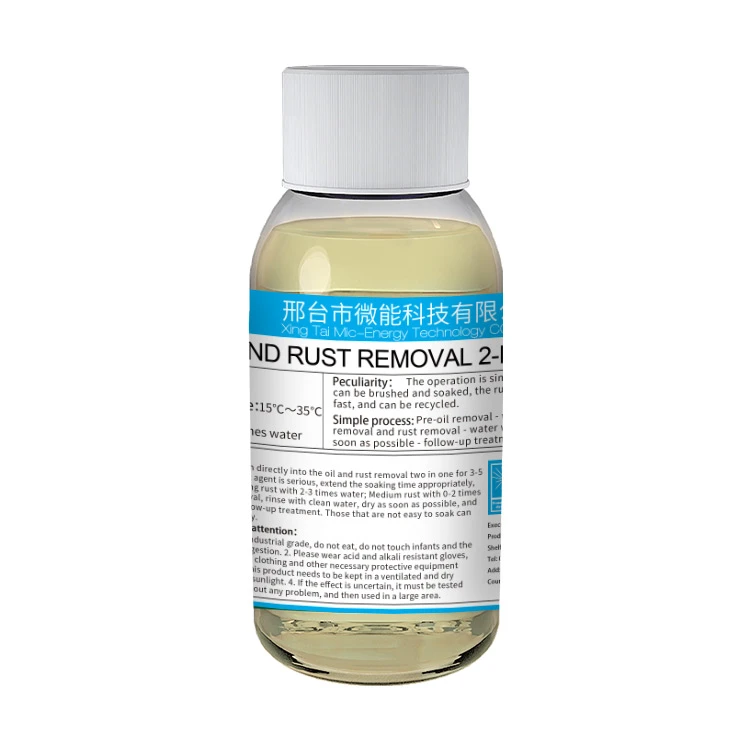
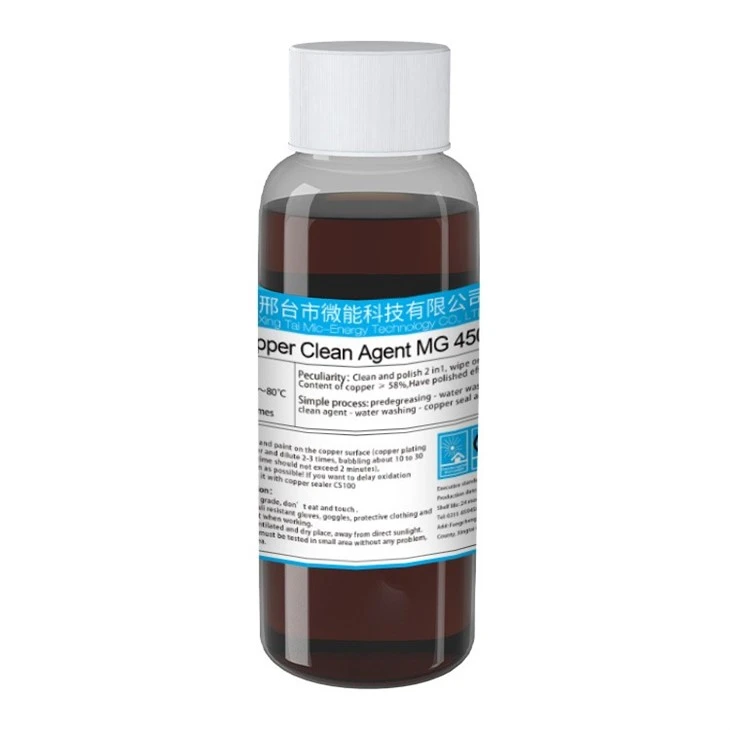
Before selection, first understand the composition and type of the oil stain to be cleaned, and select the appropriate metal cleaner according to the type of oil stain. For example, the types of oil stains on aircraft parts mainly include coke, antirust oil, lubricating oil, grease, rust, worker's sweat and other liquid residues in nature.
Prevent corrosion of mechanical parts and equipment caused by detergent. Due to special requirements in the machinery industry, the components of the workpiece are different, such as copper, lead, zinc, etc. These parts are easy to corrode. For example, workpieces with sensitive raw materials such as precision instruments, appearance and accessories will have certain requirements for the corrosion resistance of the cleaner.
The parts and components shall be cleaned in a centralized way, and the appropriate proportion shall be selected. With the increase of the cleaning concentration, the cleaning capacity shall be improved accordingly, and the decontamination ability shall be improved. At the normal cleaning concentration, the decontamination effect is not obvious when cleaning components. When the concentration reaches a certain level, the decontamination effect will be shown.
Know how to control the temperature of metal industry cleaner. When cleaning with detergent, there is a heating process, during which the decontamination ability will gradually become stronger. However, when the temperature exceeds a certain value, the detergent's decontamination ability will be reduced, and the decontamination effect will eventually be lost. Therefore, each different detergent has its own suitable temperature range, not the higher the temperature, the better. In particular, some detergents contain non-ionic substances. When heated to a certain temperature, the detergents will become dirty, and the current temperature is called "cloud point".
Use cleaning agent according to the specified use time. A cleaning agent can be used on a variety of metal parts, and the length of use depends on the pollution status of the parts and the cleaning method. Under normal conditions, solvent-based metal cleaner can be used repeatedly.
With the rapid development of China's equipment manufacturing industry, new materials, new processes and new equipment have higher and higher requirements on the performance and cleaning effect of cleaning technology and cleaning agent. Especially with the implementation of energy conservation and emission reduction policies, cleaning technology is developing towards high efficiency, energy conservation and green environmental protection. The cleaning agent used is also continuously improved, and the cleaning mechanism is constantly discovered and applied. The amount of information about cleaning agents is also increasing. It has formed a market scale with an annual consumption of hundreds of thousands of tons. Due to the particularity of cleaning direction, dirt and process requirements, metal cleaning agents are different from other chemical cleaning agents and soft surface cleaning.
Faced with increasingly strong regulatory pressure, the use of traditional solvents and strong alkalis has been reduced. Accordingly, the use of water-based or non-volatile solvent cleaners and degreasers is increasing. From the perspective of cleaning effect, the technology of water-based metal cleaning agent is nearly mature. However, from the current global trend of efforts to reduce the impact on the environment, it is very urgent to use environmentally friendly products. The development direction of general water-based metal cleaner is safe operation, long service life, low emission, low temperature cleaning, low energy consumption and good effect.
Driven by the proximity of low pressure, in the past few years, the cleaning effect of special metal cleaning agents has been improved. With the rapid development of China's equipment manufacturing industry, the requirements of new materials, new processes and new equipment for cleaning technology and the performance and cleaning effect of cleaning agents have become higher and higher. Especially with the implementation of energy conservation and emission reduction policies, cleaning technology is developing towards high efficiency, energy conservation and green environmental protection. The cleaning agent used is also continuously improved, and the cleaning mechanism is constantly discovered and applied. The amount of information about cleaning agents is also increasing. It has formed a market scale with an annual consumption of hundreds of thousands of tons. Due to the particularity of cleaning direction, dirt and process requirements, metal cleaning agents are different from other chemical cleaning agents and soft surface cleaning.
The development direction of universal water-based metal cleaning agent is the rapid development of China's equipment manufacturing industry with safe operation, long service life, low emissions and low temperature cleaning. New materials, new processes and new equipment have increasingly high requirements for cleaning technology, cleaning agent performance and cleaning effect, especially the implementation of energy conservation and emission reduction policies. The cleaning technology is developing towards high efficiency, energy conservation and green environmental protection. The cleaning agent used is also continuously improved, and the cleaning mechanism is constantly discovered and applied. The amount of information about cleaning agents is also increasing. It has formed a market scale with an annual consumption of hundreds of thousands of tons. Due to the particularity of cleaning direction, dirt and process requirements, metal cleaning agents are different from other chemical cleaning agents and soft surface cleaning.
Benefits of Metal Cleaning Agent
Aqueous and solvent cleaners are used to clean a wide variety of metal parts. Each method offers unique benefits and drawbacks. It is important to choose a method based on the materials, requirements, and cleaning process. Water-based systems require much more energy than vapor degreasing. They can also cause corrosion and other damage to parts that are being cleaned. This makes them less effective than solvents.
Alkaline metal cleaners are highly effective and cost-efficient. They can be used for a variety of applications and are a popular choice for a wide range of industrial and commercial processes. These cleaning solutions can be diluted or used at any pH. Some types of alkaline cleaning solutions are more corrosive than others. The pH level of the solution is a key factor in its effectiveness.
Keeping your wares looking their best, can be a daunting task if you’re dealing with a variety of materials. The good news is that you don’t have to go broke to keep your stuff looking its best. Luckily, there are a number of products on the market designed to tackle the job on your behalf. Depending on the type of metal you’re dealing with, you may need to buy a few different tools to do the trick. There are angle grinders, sanding discs and flap discs for the job. You’ll also need a cleaning solution that is compatible with the particular metal you’re tackling. After all, you’re not trying to rust your wares, you’re trying to make them look shiny and new again.
If you have hard water in your home, you may need to clean your faucets and fixtures to remove calcium deposits. Mineral buildups cause cloudy faucets, uneven water spray, and stains. The deposits may also appear on your toilet and glass doors. Hard water is defined as water that contains a high amount of magnesium and calcium. While this is a good thing, the dissolved minerals can leave stains on your kitchen and bathroom fixtures.
Metal cleaners have come a long way since their heydays in the 1970’s and 1980’s. These days, you can choose from alkaline and neutral cleaners and washers of all shapes and sizes. Most alkaline metal cleaners are made of a trifecta of strong ingredients. They are the most effective for heavy grease and aluminum staining. Moreover, they are cheap and readily available. Using them is a no brainer for any industrial user. A metal-cleaning system is a great addition to any plant floor.
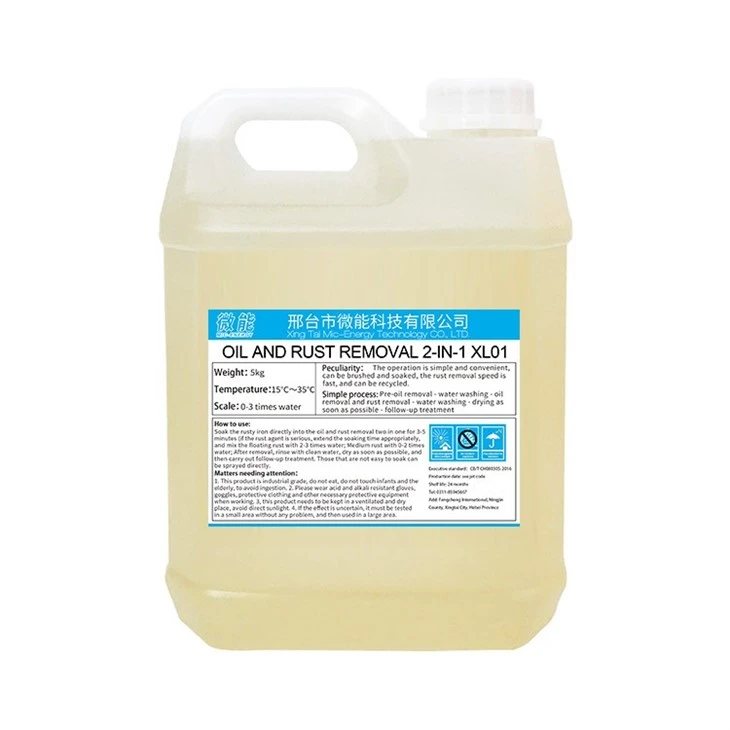
Please be sure to read the instructions for using the cleaning agent and use it correctly according to the instructions. Different brands and types of cleaning agents may have different usage methods and precautions.
Avoid prolonged soaking of metal to prevent damage to the metal surface. Follow the recommended soaking time for operation.
For metals that are particularly fragile or have special coatings, please conduct small-scale testing first to ensure that the cleaning agent does not damage the metal surface.
Wear gloves when using cleaning agents to avoid irritation or damage to the skin.
Precautions for the use of metal water soluble cleaning agents
Pay attention to the dilution concentration of the cleaning agent.
The diluted concentration of the cleaning agent has a lot to do with the cleaning effect. Sometimes it is twice more diluted, which will cause a huge difference in the effect. Generally speaking, as the dilution concentration increases, the pollution ability will also be enhanced, but after reaching a certain dilution concentration, the pollution ability will no longer be significantly improved. The dilution concentration should be controlled at 1: 5-1: 10.
Master the temperature of the cleaning agent.
Generally speaking, due to the higher the temperature of the molecular exercise, the higher the temperature of the cleaning agent, the stronger the cleaning effect. But each cleaning agent has its own best cleaning temperature, so the higher the higher the better. Especially for non -ionic cleaning agents, if the heating agent is too high, the cleaning agent will occur. The solubility of the cleaning agent in the water decreases. Some components lose their effects due to the decomposition of heating, and the decontamination capacity will be reduced. Therefore, the temperature of non -ionic cleaning agents should be controlled below the turbid point.
Control the time and amount of use of the cleaning agent.
The diluted cleaning agent can be used multiple times. The cleaning time mainly depends on the amount, material and oil severity of the cleaning object. Under normal circumstances, one to two weeks can be used for one to two weeks.
Make correct cleaning according to the different types of cleaning objects.
The dirt on the mechanical and equipment parts is very different, including oil, cement, carbon deposits, rust spots, and so on.
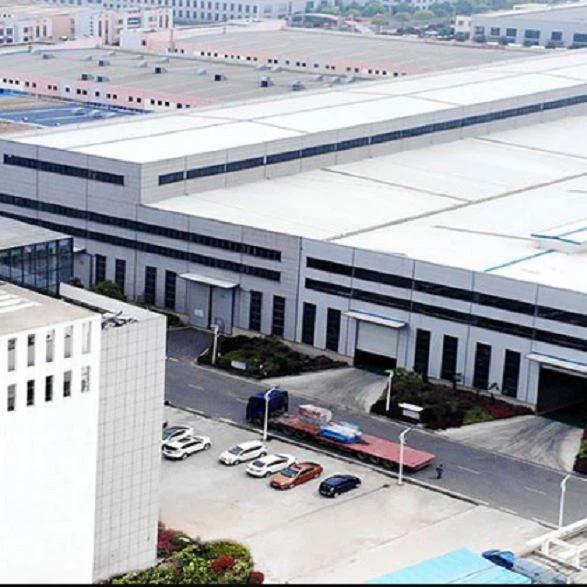
Our company was founded in 2014, with its headquarter located in XingTai. Our company is operated by a professional management team specialized in scientific research ,safe production,quality control and sales operation.We have highly automatic production lines and R&D facilities of international standard we emphasizes safety & environment protect management ,precise process control and quality supervision according to SHEQ standards (lSO9001/ISO14001/OHSAS18001).We also stick to sustainable development with social responsibilities so as to in prove the core competitiveness.Also, we have a trading company, Our sales team is consisted of up to 30 elites of high professionalism, providing our clients first-class service of high efficiency.
FAQ
As one of the leading metal cleaning agent manufacturers and suppliers in China, we warmly welcome you to wholesale bulk high quality metal cleaning agent in stock here from our factory. Contact us for free sample.